
Which Is the Best Hospital in Jharkhand for Surgery? 12 Things Patients Should Check

Quick answer: There is no single hospital that is best for every patient and every operation. The right hospital for surgery should have an appropriately qualified surgeon, experience with the required procedure, safe operation theatre systems, anaesthesia support, diagnostics, trained nursing, transparent costs, emergency preparedness and suitable ICU backup.
For patients looking for a hospital in Ranchi or elsewhere in Jharkhand, the following 12-point checklist provides a practical way to compare available options.
What makes a hospital suitable for surgery?
A suitable surgical hospital brings several parts of care together:
- The correct surgeon and speciality
- Accurate diagnosis and preoperative assessment
- Anaesthesia and operation theatre safety
- Nursing, diagnostics and pharmacy support
- Emergency and critical-care backup
- Clear consent and communication
- Transparent financial information
- Structured recovery and follow-up
The biggest building, the lowest quotation or the most attractive advertisement does not automatically identify the right hospital. The hospital must be suitable for the patient's particular diagnosis, proposed operation and medical condition.
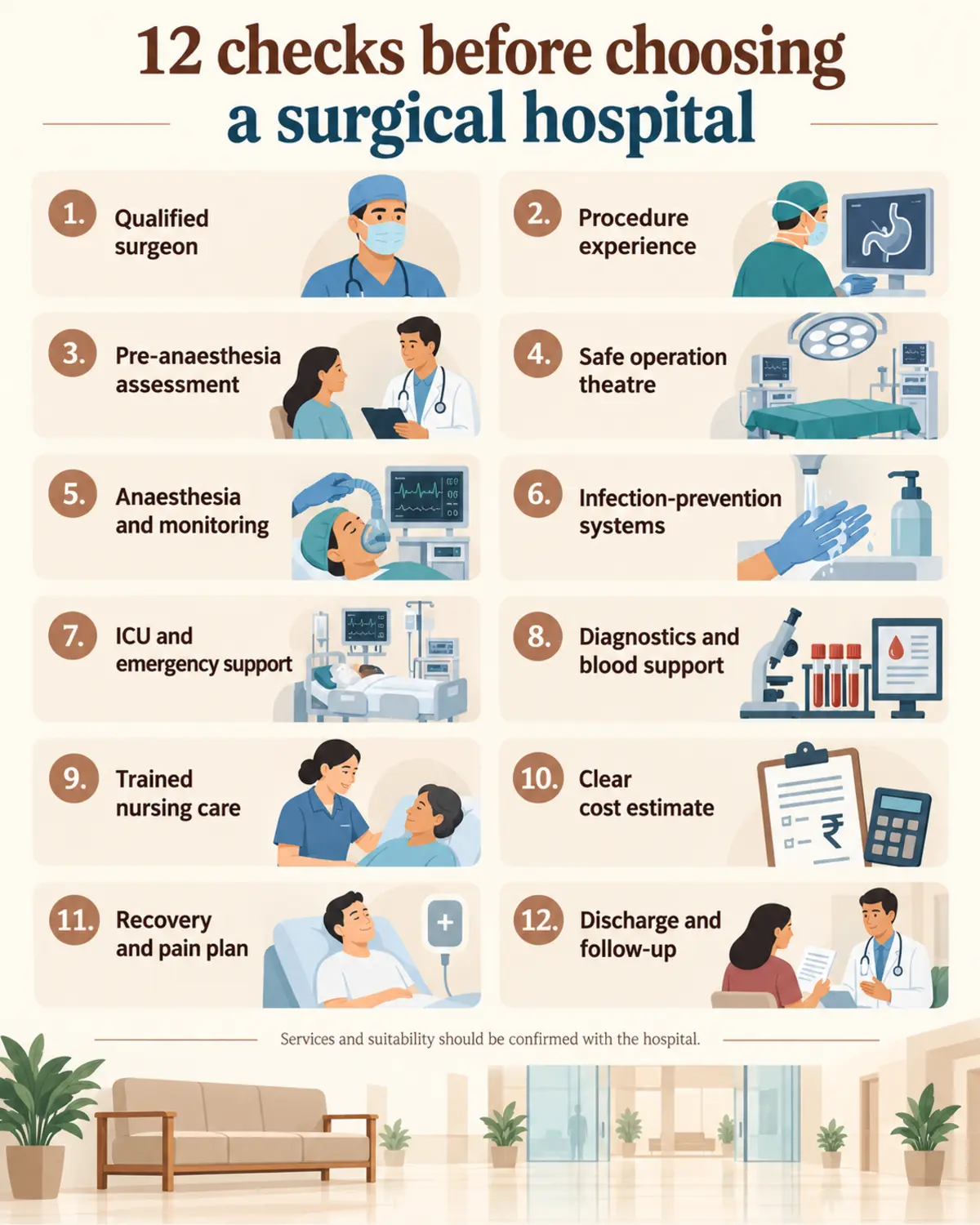
1. Is the right specialist available for the required surgery?
Begin by identifying the type of surgeon required. Gallbladder stones, hernia, appendicitis, joint disease, heart disease, urinary conditions, gynaecological problems and ENT conditions require different specialists and hospital support.
Ask the hospital:
- Which specialist will evaluate the patient?
- Who will be the primary operating surgeon?
- What are the surgeon's qualifications and area of practice?
- Does the surgeon regularly manage this condition?
- Will another specialist be required?
- Who will look after the patient after surgery?
A surgeon may be highly experienced in one category of operation without performing every type of surgery. The speciality should match the patient's diagnosis. Patients can review the specialist doctors available at Hopewell Hospital before requesting an appointment.
2. Does the hospital regularly perform the proposed procedure?
Experience with the particular operation matters. Ask how the hospital normally manages patients requiring the same or a similar procedure. The discussion should include:
- How the diagnosis is confirmed
- Whether nonsurgical treatment is possible
- The proposed surgical approach
- Anaesthesia requirements
- Expected hospital stay
- Pain-management arrangements
- Likely recovery period
- Possible risks and complications
- Follow-up requirements
Patients looking for surgical treatment in Ranchi can explore Hopewell's available hospital services and Centres of Excellence.
3. Has the diagnosis been properly confirmed?
An operation should be recommended after an appropriate clinical evaluation. Depending on the condition, the treating doctor may need blood tests, ultrasound, X-ray, CT scan, MRI, endoscopy, biopsy or other investigations. Some patients may also require medical, cardiac or anaesthesia clearance.
Before agreeing to surgery, ask:
- What is the confirmed diagnosis?
- Why is surgery being recommended?
- Is the operation urgent, planned or optional?
- Are nonsurgical alternatives available?
- What may happen if the procedure is delayed?
- Is a second opinion reasonable?
- Are further investigations required?
Not every patient with similar symptoms requires the same treatment.
4. Is a qualified anaesthesia team involved?
Anaesthesia is a central part of surgical safety. The anaesthesia team evaluates whether the patient is fit for the proposed procedure and identifies risks associated with age, medical history, medicines and existing illnesses.
The patient must inform the team about:
- Diabetes or high blood pressure
- Heart, lung, kidney or liver disease
- Current medicines and supplements
- Blood-thinning medicines
- Known allergies
- Previous reactions to anaesthesia
- Earlier operations or hospitalisations
- Pregnancy or possibility of pregnancy
- Tobacco, alcohol or other substance use
Patients should never stop prescribed medicines before surgery unless advised by the treating doctor or anaesthetist.
5. What operation theatre safety processes are followed?
Safe surgery depends on a coordinated team and a defined process. Before an operation, the clinical team should verify the patient's identity, proposed procedure, surgical site, consent, allergies, anaesthesia risk, required equipment and any anticipated concerns.
The World Health Organization developed a 19-item Surgical Safety Checklist to reduce errors and improve communication and teamwork during surgery. Hospitals may adapt the checklist to their setting while preserving its core safety objectives.
Patients may ask:
- Is a documented surgical safety checklist followed?
- How are the patient and procedure verified?
- How is the correct surgical site confirmed?
- How are allergies and anticipated blood loss communicated?
- How are instruments and consumables accounted for?
- How is the patient handed over after surgery?
6. Is emergency and ICU backup available?
Many operations proceed without requiring intensive care. However, a patient's condition can sometimes change unexpectedly. The need for ICU or high-dependency monitoring depends on:
- The complexity of surgery
- The patient's age
- Heart or lung disease
- Diabetes or kidney disease
- Expected blood loss
- Anaesthesia risk
- Infection or sepsis
- Postoperative breathing or circulation concerns
A surgical hospital should have an escalation plan for emergencies. Hopewell Hospital provides 24×7 Emergency Medicine with triage, trauma response and coordination with specialist teams. Its ICU and Critical Care service includes continuous monitoring, respiratory support and postoperative critical care.
7. Are diagnostics, pharmacy and other support services coordinated?
Surgery is not performed by the surgeon alone. Depending on the patient and procedure, care may involve:
- Anaesthetists
- Physicians or cardiologists
- Radiologists
- Pathologists
- Intensivists
- Operation theatre nurses
- Ward and ICU nurses
- Pharmacists
- Physiotherapists
- Dieticians
- Blood-support services
Coordinated diagnostics and clinical support can reduce unnecessary movement and delays. For patients with heart disease or increased cardiac risk, access to Cardiac Sciences at Hopewell Hospital may support assessment and coordinated care when clinically required.
8. How does the hospital prevent infections?
No hospital can honestly promise that an infection will never occur. However, the hospital should have systems intended to reduce avoidable risk. Patients may ask about:
- Hand-hygiene practices
- Cleaning and disinfection
- Sterilisation of surgical instruments
- Operation theatre protocols
- Antibiotic policies
- Wound-care instructions
- Biomedical-waste management
- Monitoring of postoperative infections
Patients and attendants also have a role. They should follow hand-hygiene, visitor, wound-care and medication instructions.
9. Is informed consent taken properly?
Consent is more than obtaining a signature. Before surgery, the patient or authorised representative should receive an understandable explanation of:
- The diagnosis
- The proposed operation
- Expected benefits
- Important risks and possible complications
- Reasonable alternatives
- Type of anaesthesia
- Possible need for blood or blood components
- Expected hospital stay
- Recovery and follow-up
- Possibility of changing the surgical plan if unexpected findings arise
NABH patient-care standards emphasise patient rights, understandable information and informed consent before surgery and anaesthesia. Patients should ask questions before signing the consent form. They should not sign incomplete or blank documents.
10. Is the surgical cost explained transparently?
A low initial quotation may not represent the final bill. Request a written estimate and ask what it includes. Depending on the procedure, the estimate may cover:
- Surgeon's fee
- Assistant surgeon's fee
- Anaesthetist's fee
- Operation theatre charges
- Room or ward charges
- Nursing charges
- Medicines and consumables
- Implants, mesh, staplers or special devices
- Laboratory and imaging
- Histopathology
- ICU charges, if required
- Physiotherapy and rehabilitation
- Follow-up consultations
Also ask what is excluded and under what circumstances the cost may increase. An exact estimate may not be possible before consultation and review of the patient's reports. However, the hospital should explain the expected components of the bill.
11. Does the hospital support insurance, TPA or applicable schemes?
Before admission, confirm whether the hospital accepts the patient's insurance, third-party administrator, corporate arrangement or applicable health scheme. Ask:
- Is the proposed treatment covered?
- Is pre-authorisation required?
- What documents must be submitted?
- Is there a waiting period or exclusion?
- Is a co-payment applicable?
- Are implants and consumables covered?
- Which expenses must be paid directly?
- What happens if the approved amount is lower than the final bill?
Insurance approval is normally governed by the insurer's or scheme authority's terms. Hospital empanelment does not guarantee approval for every procedure. Patients can contact Hopewell's TPA, insurance and appointment team for guidance relating to hospital documentation and available services.
12. Is recovery and follow-up planned before discharge?
Recovery planning should begin before admission. Ask the clinical team:
- When can the patient drink, eat, sit and walk?
- How will pain be managed?
- How should the wound be cared for?
- Will physiotherapy be required?
- What activity or dietary restrictions apply?
- When can the patient return to work, travel or drive?
- When is the first follow-up?
- Which warning signs require urgent attention?
- Whom should the family contact after discharge?
The patient should receive understandable discharge instructions, prescriptions, reports and follow-up information.
Choosing a surgical hospital when travelling from another part of Jharkhand
Patients frequently travel to Ranchi from Hazaribagh, Ramgarh, Bokaro, Gumla, Lohardaga and other parts of Jharkhand. Families should consider:
- Distance and travel time
- Ambulance or transfer requirements
- Accommodation for attendants
- Number of expected follow-up visits
- Availability of prescribed medicines locally
- Whether reports can be reviewed remotely
- What to do if symptoms develop after returning home
Travel convenience is important, but it should not replace clinical suitability.
Red flags that patients should not ignore
Be cautious if:
- Surgery is recommended without an understandable diagnosis
- The operating surgeon is not clearly identified
- Important risks and alternatives are not discussed
- The hospital refuses to provide a written estimate
- The patient is asked to sign blank documents
- Current medicines or medical conditions are ignored
- No postoperative or emergency-contact plan is provided
- Guaranteed results are promised
- The family is discouraged from asking reasonable questions
Emergency situations may require rapid decisions, but the clinical team should still communicate as clearly as circumstances allow.
Why patients consider Hopewell Hospital in Ranchi
Hopewell Hospital, Ranchi is a 70-bed cardiac and surgical hospital located on Hazari Baug Road, Tharpakna, Ranchi. Its care model brings specialist consultation, diagnostics, surgery, emergency care, ICU support and recovery coordination together around the patient.
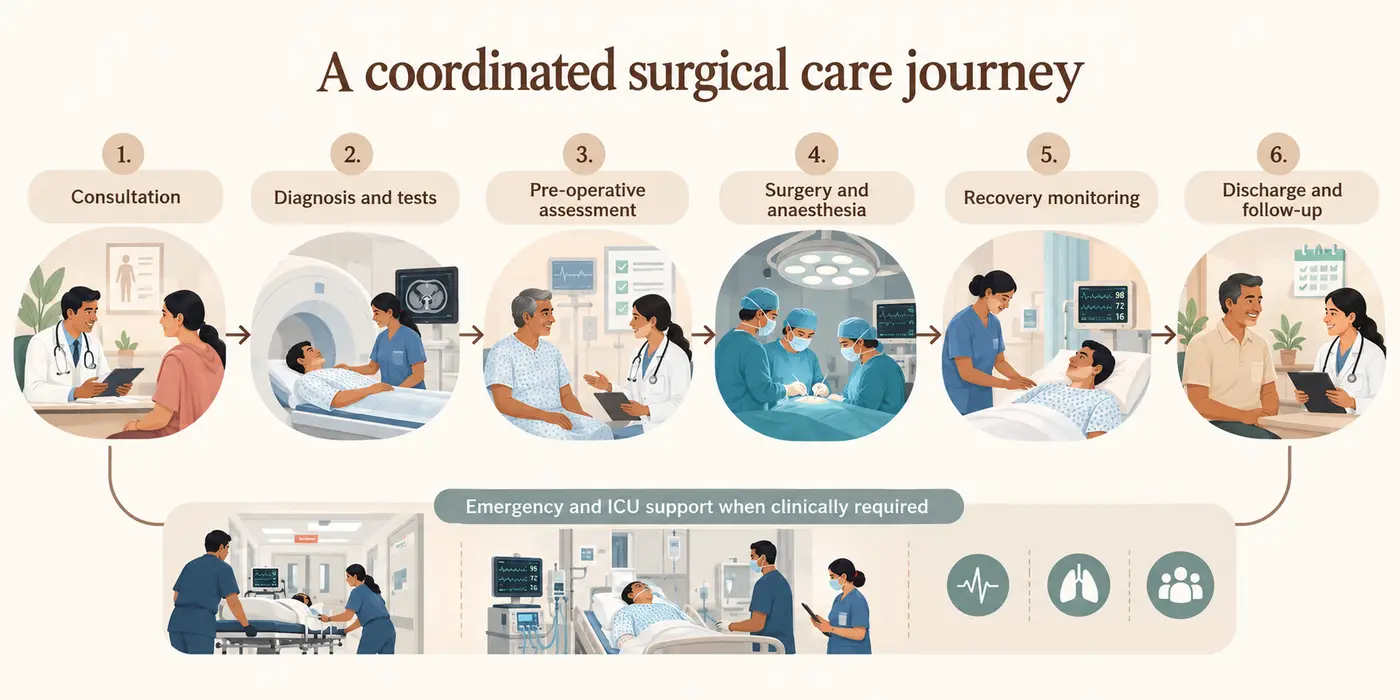
Hopewell's available clinical services include:
- General, gastrointestinal and laparoscopic surgery
- Cardiac sciences
- Emergency medicine
- ICU and critical care
- IVF, gynaecology and women's health
- Orthopaedics and joint replacement
- Paediatrics and neonatology
- Urology
- Vascular surgery
- ENT
- Spine care
- Diagnostics
The correct speciality and treatment plan will depend on the patient's diagnosis and clinical assessment. Patients and families can book an appointment or contact Hopewell Hospital to confirm consultant availability, required reports, insurance eligibility and hospital services before travelling.
Final answer: Which is the best hospital in Jharkhand for surgery?
The best hospital for surgery is the hospital that is appropriately equipped for the patient's particular procedure and medical condition. Patients should compare:
- The surgeon's relevant expertise
- Experience with the required procedure
- Diagnostic and preoperative assessment
- Anaesthesia support
- Operation theatre safety
- Emergency and ICU backup
- Diagnostics and multidisciplinary support
- Infection-prevention systems
- Informed consent
- Transparent costs
- Insurance coordination
- Recovery and follow-up
A hospital should be selected on evidence, suitability, safety and communication rather than a single advertisement, quotation or online claim.
Have questions about this condition?
Speak with the Hopewell Hospital team for a personalised assessment and treatment plan.
Frequently asked questions
Which is the best hospital in Jharkhand for surgery?
No single hospital is best for every condition. Choose according to the required surgeon, procedure, operation theatre systems, anaesthesia, diagnostics, ICU support, emergency preparedness, costs and follow-up facilities.
Which hospital in Ranchi provides surgical and ICU care?
Hopewell Hospital in Ranchi provides surgical services along with emergency medicine, ICU and critical-care support. The required speciality and consultant availability should be confirmed before admission.
Is Hopewell Hospital suitable for laparoscopic surgery?
Hopewell provides general, GI and laparoscopic surgical services. Suitability for a particular procedure can only be determined after consultation, examination and review of investigations.
Does every surgical patient need ICU admission?
No. Many patients recover in a postoperative recovery area or ward. ICU care may be required for complex surgery, higher-risk patients or unexpected clinical deterioration.
Should I take a second opinion before surgery?
A second opinion can be useful when the diagnosis is uncertain, the surgery is complex, different treatment options are available or the patient wants more clarity. An emergency may not always allow time for another consultation.
Is the cheapest hospital quotation the best option?
Not necessarily. Compare what each estimate includes, the surgeon and hospital support, implants or consumables, expected stay, ICU provisions and possible additional expenses.
What documents should I carry for a surgical consultation?
Carry previous prescriptions, investigation reports, scan films or digital images, discharge summaries, details of current medicines, allergy information, identity documents and insurance or scheme documents.
How can I contact Hopewell Hospital?
For appointments, emergency assistance, ambulance coordination, insurance enquiries or directions, visit the Hopewell Hospital contact page. For a life-threatening emergency, call the hospital directly rather than using an online form.
Medical disclaimer
This article provides general patient education. It does not diagnose a condition, recommend a particular operation or replace consultation with a qualified medical professional. Treatment decisions must be based on examination, investigations and individual clinical circumstances. Seek immediate medical assistance during an emergency.