
Gallstones: When Is Gallbladder Surgery Necessary and When Can You Wait?

Quick answer: Not every person with gallstones needs an operation. Gallstones found accidentally and causing no symptoms can often be observed. Surgery is more commonly considered when gallstones cause repeated pain, gallbladder inflammation, jaundice, bile-duct blockage, pancreatitis or another complication.
Anyone experiencing severe or persistent upper abdominal pain, fever, jaundice, repeated vomiting or increasing weakness should seek prompt medical assessment rather than waiting for a routine appointment.
What are gallstones?
Gallstones are hardened deposits that form inside the gallbladder. They may be made mainly of cholesterol, bilirubin or a mixture of substances found in bile.
The gallbladder is a small organ located below the liver. It stores bile produced by the liver and releases it into the intestine to help digest fats.
A person may have:
- One large stone
- Several smaller stones
- Very small stones or sludge
- Gallstones without any symptoms
- Gallstones that obstruct the gallbladder or bile ducts
The size or number of stones alone does not determine whether surgery is required. Symptoms, complications, investigation findings and the patient's health are more important.
Do all gallstones require surgery?
No. Gallstones that do not cause symptoms are often called silent gallstones. According to the National Institute of Diabetes and Digestive and Kidney Diseases, silent gallstones generally do not interfere with the functioning of the gallbladder, liver or pancreas and usually do not require treatment.
However, a person with gallstones should seek medical advice if symptoms begin. The decision to observe or operate depends on:
- Nature and frequency of symptoms
- Ultrasound and blood-test findings
- Signs of gallbladder inflammation
- Presence of stones in the bile duct
- Previous attacks or hospital admissions
- Pancreatitis or jaundice
- Age and general health
- Other medical conditions
- Surgeon's assessment
What does gallstone pain usually feel like?
Gallstone pain is commonly felt in the upper-right or upper-middle abdomen. It may:
- Begin suddenly
- Become severe
- Spread towards the back or right shoulder
- Occur after eating, particularly after a heavy or fatty meal
- Last from several minutes to a few hours
- Be accompanied by nausea or vomiting
- Settle and then return on another occasion
Pain alone cannot confirm gallstones. Acidity, ulcers, pancreatitis, liver conditions, heart problems and other diseases can produce overlapping symptoms. A clinical examination and appropriate investigations are necessary.
When do gallstones become an emergency?
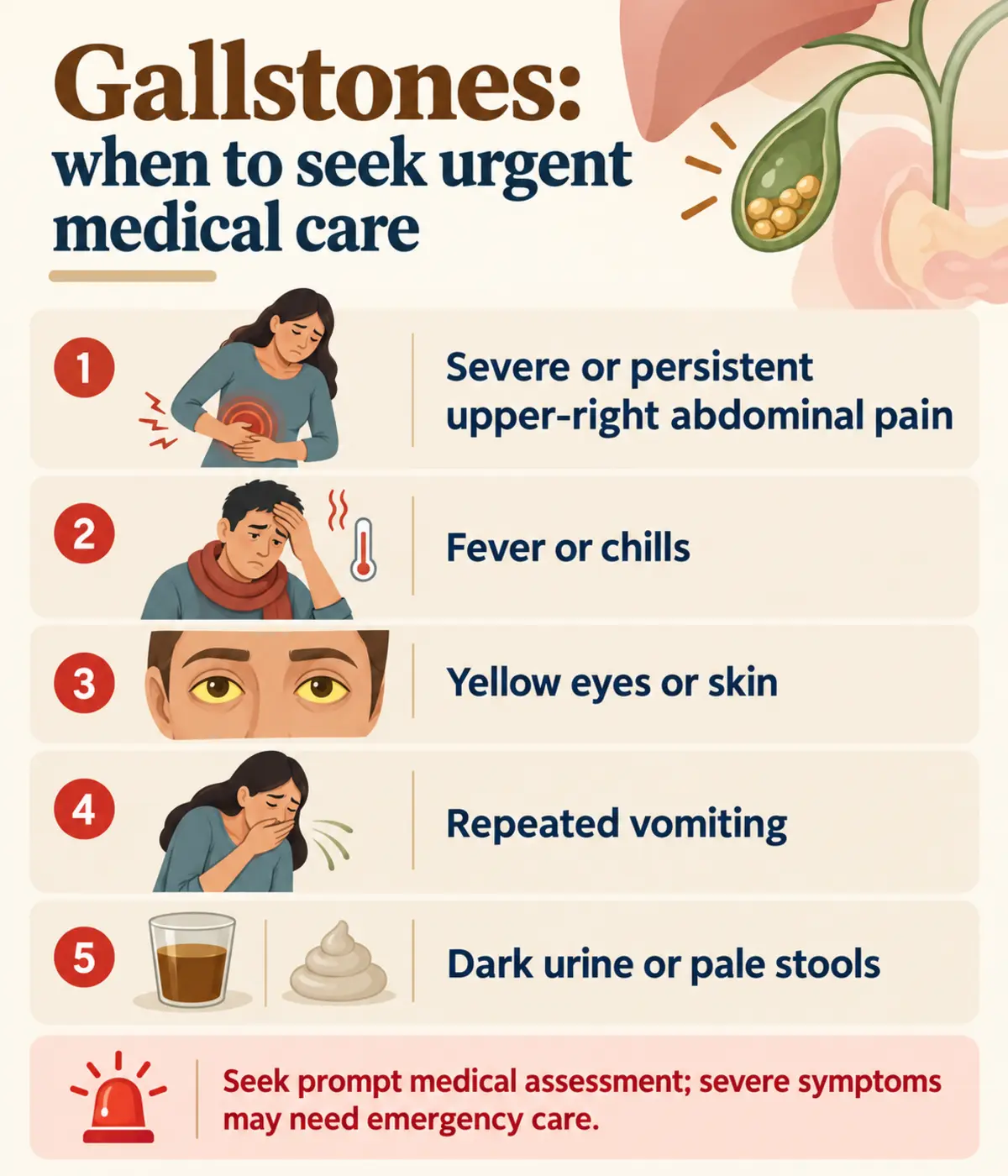
Seek urgent medical assistance if abdominal pain is accompanied by:
- Fever or chills
- Yellowing of the eyes or skin
- Dark urine or unusually pale stools
- Persistent or worsening pain
- Repeated vomiting
- Severe abdominal tenderness
- Increasing abdominal swelling
- Fainting, confusion or unusual drowsiness
- Difficulty breathing
- Rapid deterioration or extreme weakness
These symptoms may indicate inflammation, infection, bile-duct obstruction, pancreatitis or another urgent condition. For urgent assessment in Ranchi, patients can contact Hopewell Hospital Emergency Medicine. During a life-threatening emergency, call the hospital directly instead of waiting for an online response.
What complications can gallstones cause?
Gallstones may remain silent for years. However, if a stone blocks the flow of bile, complications can develop.
Acute cholecystitis
Acute cholecystitis is inflammation of the gallbladder, commonly caused by a stone blocking the gallbladder outlet. Symptoms may include persistent upper-right abdominal pain, tenderness, fever, nausea and vomiting.
Bile-duct stones
A gallstone may move from the gallbladder into the common bile duct. This can obstruct bile flow and cause jaundice, infection or pancreatitis.
Cholangitis
Cholangitis is an infection of the bile ducts. Fever, abdominal pain and jaundice require urgent medical attention.
Gallstone pancreatitis
A stone can obstruct the area where the bile and pancreatic ducts drain, leading to inflammation of the pancreas. Gallstone pancreatitis may cause severe upper abdominal pain, vomiting and significant illness.
Gallbladder perforation or abscess
Severe inflammation can occasionally lead to pus formation, tissue damage or perforation. These are serious complications requiring hospital treatment.
When is gallbladder surgery usually considered?
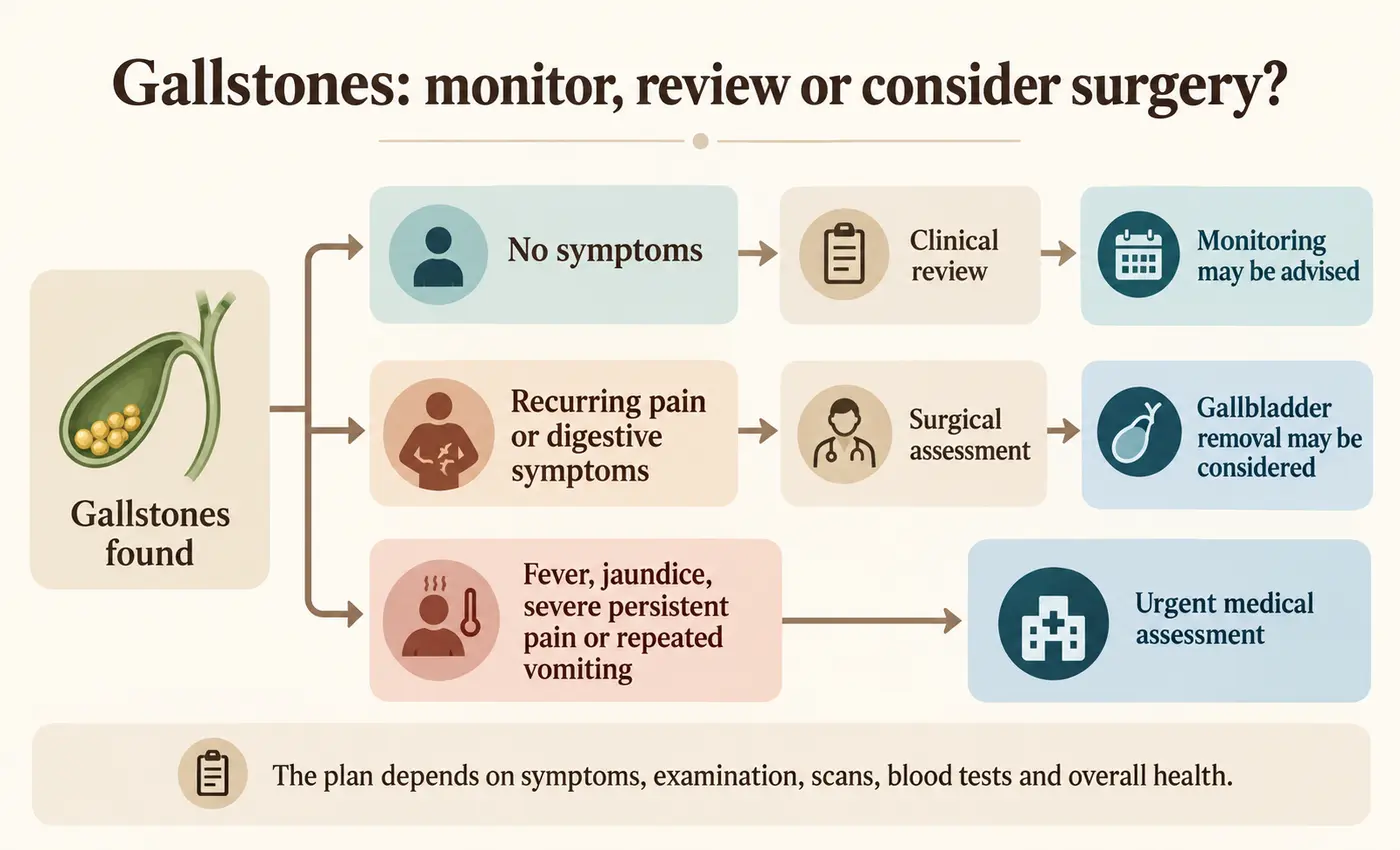
A surgeon may consider gallbladder removal when the patient has:
- Repeated attacks of typical gallstone pain
- Acute or recurrent gallbladder inflammation
- Gallstones causing bile-duct obstruction
- Jaundice related to stones
- Gallstone pancreatitis
- Infection of the gallbladder or bile ducts
- Complications identified on imaging
- Symptoms significantly affecting eating or daily life
- Another clinical reason identified by the treating specialist
Timing depends on the diagnosis and severity. Some patients need planned surgery, while others require urgent admission and treatment.
When may observation be reasonable?
Observation may be considered when:
- Gallstones were found accidentally
- The patient has no gallstone-related symptoms
- Symptoms are unlikely to be caused by the gallbladder
- Surgical risk currently outweighs the expected benefit
- Further tests are required before deciding
- The treating surgeon recommends monitoring
Observation does not mean ignoring new symptoms. Patients should know which warning signs require reassessment.
How are gallstones diagnosed?
Evaluation normally begins with medical history and physical examination. Investigations may include:
Abdominal ultrasound
Ultrasound is commonly used to detect gallstones and assess the gallbladder. It can also identify findings that may suggest inflammation or obstruction.
Blood tests
Blood tests may assess:
- Infection or inflammation
- Liver function
- Bilirubin
- Pancreatic enzymes
- Kidney function
- Anaemia and general surgical fitness
Additional imaging
If a bile-duct stone or complication is suspected, the doctor may advise additional imaging such as MRCP, CT or another appropriate test.
ERCP
ERCP is an endoscopic procedure that may be used to diagnose and remove stones from the bile duct in selected patients. It is not the same as gallbladder removal. The appropriate investigation depends on the clinical situation.
Can medicines or diet remove gallstones?
Diet changes may help some patients reduce symptom triggers while awaiting medical advice, but food restriction does not reliably remove established gallstones.
Nonsurgical treatment is used only in selected situations and may not be suitable for many patients. The usual definitive treatment for symptomatic gallstones is surgery to remove the gallbladder.
Patients should be cautious about remedies claiming to “flush out” or dissolve gallstones quickly. Such approaches may delay necessary treatment and do not replace medical evaluation. Do not begin extreme fasting or rapid weight-loss programmes without professional advice. Rapid weight loss can itself increase the risk of gallstone formation.
Why is the gallbladder removed instead of only removing the stones?
If only the stones are removed while the gallbladder remains, stones may form again because the underlying gallbladder environment remains unchanged.
For symptomatic gallstones, the standard operation is usually cholecystectomy, meaning removal of the gallbladder. If stones have moved into the common bile duct, they may require separate management before, during or after gallbladder surgery. The treatment plan depends on blood tests, imaging and clinical findings.
What is laparoscopic gallbladder surgery?
Laparoscopic cholecystectomy removes the gallbladder through several small abdominal incisions using a camera and specialised instruments. Potential advantages for suitable patients may include:
- Smaller incisions
- Less postoperative discomfort
- Shorter hospital stay
- Earlier mobilisation
- Faster return to some normal activities
- Smaller scars
These are potential benefits, not guaranteed outcomes. Patients can read the detailed Hopewell guide to laparoscopic gallbladder surgery in Ranchi. For a broader explanation of keyhole procedures, read which operations can be performed through laparoscopic surgery.
Can laparoscopic gallbladder surgery become an open operation?
Yes. A surgeon may convert the operation to an open procedure if continuing laparoscopically becomes unsafe. Possible reasons include:
- Severe inflammation
- Dense adhesions
- Difficult or unclear anatomy
- Uncontrolled bleeding
- Suspected injury
- Unexpected findings
- Another concern requiring wider access
Conversion to open surgery should not automatically be considered a failure. It can be a responsible safety decision.
What are the risks of gallbladder surgery?
All operations have risks. Important risks may include:
- Reaction to anaesthesia
- Bleeding
- Infection
- Blood clots
- Bile leakage
- Injury to the bile duct
- Injury to nearby organs or blood vessels
- Retained bile-duct stones
- Hernia at an incision
- Need for another procedure
- Conversion to open surgery
The individual risk varies according to the patient's age, health, anatomy, disease severity and previous operations. The surgeon and anaesthetist should explain the significant benefits, alternatives and risks before consent.
Can a person live normally without a gallbladder?
Yes. Most people can live without a gallbladder. The liver continues to produce bile, which flows more continuously into the intestine instead of being stored in the gallbladder.
Some patients may temporarily experience:
- Indigestion
- Bloating
- Loose stools
- Difficulty tolerating heavy or oily meals
Diet tolerance often improves over time, but recovery differs between individuals. Persistent symptoms should be discussed with the treating doctor.
What happens before gallbladder surgery?
Preoperative preparation may include:
- Surgical consultation
- Review of ultrasound and blood reports
- Anaesthesia assessment
- Medical or cardiac clearance when required
- Instructions about fasting
- Review of blood thinners and other medicines
- Diabetes and blood-pressure planning
- Discussion of surgical risks and consent
- Written estimate and insurance documentation
Patients should disclose all medicines, supplements, allergies and previous anaesthesia problems. Do not stop prescribed medicines unless instructed by the treating doctor or anaesthetist.
How long is recovery after gallbladder removal?
Recovery depends on:
- Whether surgery was laparoscopic or open
- Severity of inflammation or infection
- Patient's age and health
- Pain control
- Ability to eat, drink and walk
- Development of any complication
- Nature of the patient's work
Some laparoscopic patients may leave after a short hospital stay, while patients with complicated disease or open surgery may require longer admission and recovery. Follow the treating surgeon's instructions about:
- Wound care
- Bathing
- Diet
- Driving
- Lifting weight
- Exercise
- Returning to work
- Follow-up visits
What should you eat while waiting for gallbladder assessment?
There is no single diet that suits everyone. Until medical assessment, patients who notice food-related attacks may benefit from:
- Smaller meals
- Avoiding very heavy or oily meals
- Maintaining hydration
- Avoiding foods that repeatedly trigger pain
- Eating a balanced diet
- Avoiding crash diets and rapid weight loss
Diet may reduce symptom triggers, but it does not treat infection, obstruction or pancreatitis.
What is the cost of gallbladder surgery in Ranchi?
The cost cannot be determined from the word “gallstone” alone. The estimate may depend on:
- Planned laparoscopic or open approach
- Severity of inflammation
- Surgeon and anaesthetist fees
- Operation theatre charges
- Room category
- Medicines and consumables
- Laboratory and imaging requirements
- Bile-duct evaluation or additional procedures
- Hospital stay
- ICU requirement
- Insurance or scheme coverage
- Unexpected findings or complications
A reliable estimate usually requires consultation, examination and review of investigations. Ask for a written estimate showing inclusions, exclusions and circumstances that may change the final bill.
Gallbladder and GI surgery at Hopewell Hospital, Ranchi
Hopewell Hospital, Ranchi provides evaluation and surgical care for gallbladder, gastrointestinal and related general surgical conditions. The care pathway can connect:
- Surgical consultation
- Ultrasound and diagnostic assessment
- Preoperative evaluation
- Anaesthesia
- Laparoscopic or open surgery when indicated
- Nursing and pharmacy
- Emergency care
- ICU support when clinically required
- Discharge and follow-up
Patients can also explore GI surgery at Hopewell Hospital and review the hospital's specialist doctors. Patients travelling from Hazaribagh, Ramgarh, Bokaro, Gumla, Lohardaga or another part of Jharkhand should confirm consultant availability and the reports they need to bring. To discuss gallstone symptoms or a previously advised operation, contact Hopewell Hospital for a surgical consultation.
Final answer: When do gallstones need surgery?
Silent gallstones often do not require treatment. Surgical assessment becomes important when gallstones cause:
- Repeated typical pain
- Gallbladder inflammation
- Infection
- Jaundice
- Bile-duct obstruction
- Pancreatitis
- Another recognised complication
Severe persistent pain, fever, jaundice or repeated vomiting requires urgent medical assessment. The decision should be based on symptoms, clinical examination, ultrasound, blood tests and the surgeon's evaluation rather than only the number or size of stones.
Have questions about this condition?
Speak with the Hopewell Hospital team for a personalised assessment and treatment plan.
Frequently asked questions
Do all gallstones need surgery?
No. Gallstones causing no symptoms often do not require treatment. Surgery is more commonly considered when symptoms or complications occur.
Can gallstones disappear without surgery?
Established gallstones generally do not disappear through routine dietary changes. Nonsurgical treatments are used only in selected situations and may not prevent recurrence.
What are the first symptoms of gallstones?
Typical symptoms may include upper-right or upper-middle abdominal pain, pain spreading to the back or right shoulder, nausea or vomiting, sometimes after a heavy meal.
Which symptoms indicate an emergency?
Persistent severe pain, fever, chills, jaundice, repeated vomiting, breathing difficulty, confusion or rapid deterioration require urgent assessment.
Is ultrasound enough to diagnose gallstones?
Ultrasound is commonly the first imaging test. Blood tests and additional imaging may be required when inflammation, bile-duct stones or another complication is suspected.
Is the whole gallbladder removed?
For symptomatic gallstones, the usual operation is removal of the gallbladder rather than removal of only the stones.
Can I live normally after gallbladder removal?
Most people can live normally without a gallbladder. Some may temporarily experience digestive changes, particularly with heavy or oily foods.
Is laparoscopic gallbladder surgery always possible?
No. The appropriate approach depends on the patient, disease severity and surgical findings. Conversion to open surgery may occasionally be required for safety.
How many days will I remain in hospital?
The stay depends on whether the surgery is planned or urgent, whether it remains laparoscopic, the severity of inflammation and the patient's recovery.
Where can I consult for gallbladder surgery in Ranchi?
Hopewell Hospital provides consultation and surgical evaluation for gallbladder and related GI conditions. Contact the hospital before travelling to confirm the consultant schedule.
Medical disclaimer
This article provides general patient education and does not diagnose gallstones or determine whether surgery is required. Abdominal pain can have several causes. Treatment decisions require examination and investigation review by a qualified medical professional. Seek urgent medical assistance for severe pain, fever, jaundice, repeated vomiting or rapid deterioration.