
Laparoscopic Surgery in Ranchi: Which Operations Can Be Performed Through Keyhole Surgery?

Quick answer: Laparoscopic surgery, commonly called keyhole or minimally invasive surgery, is performed through small incisions using a camera and specialised instruments. In suitable patients, it may be used for gallbladder removal, appendix surgery, selected hernia repairs, gastrointestinal procedures and some gynaecological operations.
Compared with traditional open surgery, laparoscopy may offer smaller incisions, less postoperative pain, a shorter hospital stay and faster recovery for selected procedures. However, it is not automatically appropriate for every patient or every operation. The surgeon must decide the safest approach after examining the patient and reviewing the investigations.
What is laparoscopic surgery?
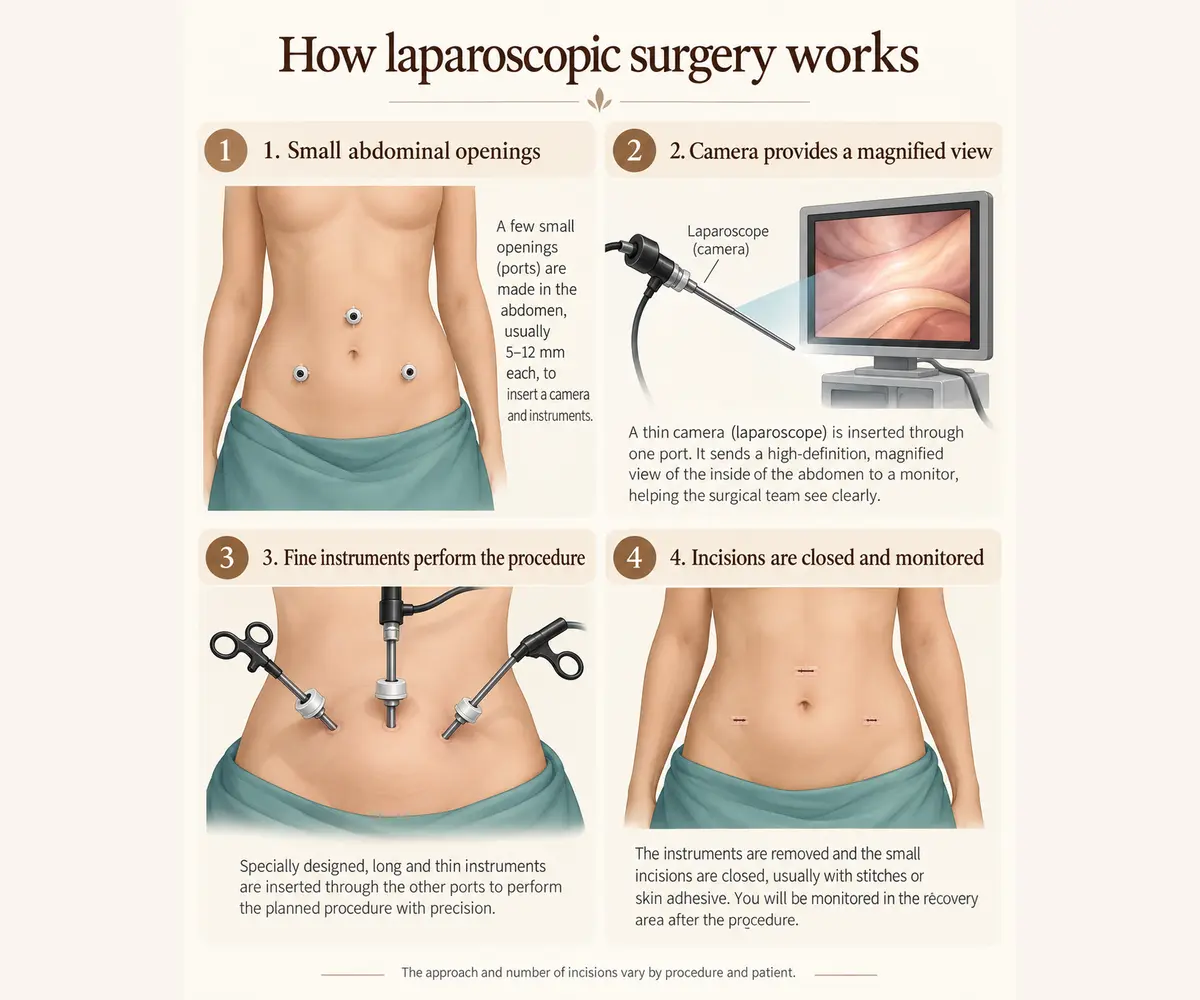
Laparoscopic surgery is a minimally invasive technique used to examine or operate inside the abdomen or pelvis.
The surgeon usually makes a few small incisions instead of one larger incision. A thin instrument containing a camera, called a laparoscope, allows the surgical team to view the internal organs on a monitor. Other specialised instruments are passed through additional small openings to perform the procedure.
The number and size of incisions depend on the operation, the patient's condition and the surgeon's planned technique. Laparoscopic surgery may be used for diagnosis, treatment or both.
Is keyhole surgery the same as laparoscopic surgery?
In most patient conversations, the terms are used interchangeably:
- Laparoscopic surgery
- Keyhole surgery
- Minimally invasive surgery
They generally describe operations performed through small incisions with camera guidance. However, not every minimally invasive procedure is laparoscopic. Endoscopic, arthroscopic, robotic and catheter-based procedures use different techniques. Patients should ask the surgeon exactly which procedure is being proposed.
Which operations can be performed laparoscopically?
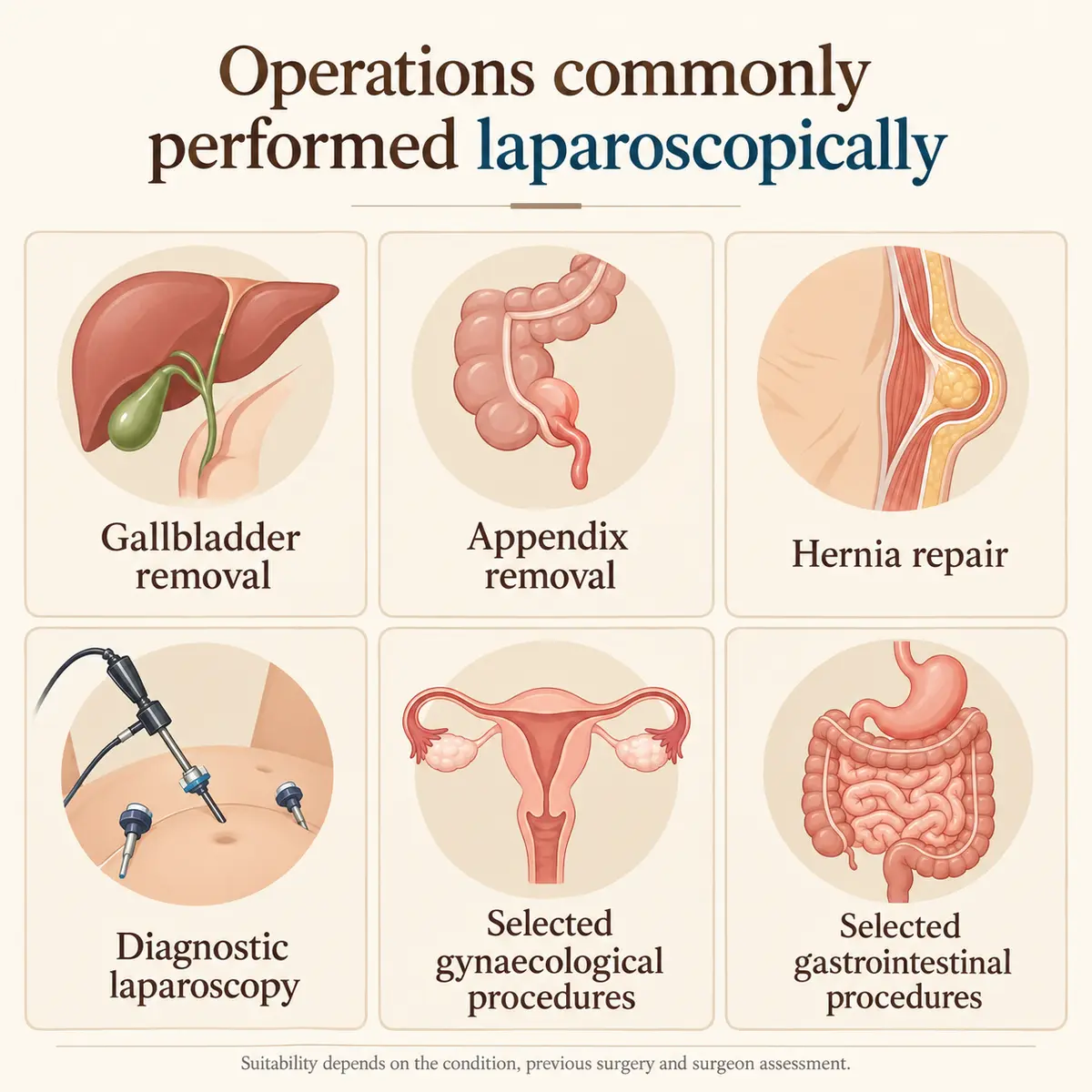
The use of laparoscopy depends on the diagnosis, the surgeon's expertise, previous operations, disease severity and the patient's overall health. Common applications include the following.
1. Gallbladder surgery
Laparoscopic cholecystectomy is an operation to remove the gallbladder, commonly performed when gallstones cause repeated pain, inflammation or related complications. The gallbladder is usually removed through small abdominal incisions. The patient's symptoms, ultrasound findings, blood tests and overall condition help determine whether surgery is required. Patients can learn more about laparoscopic gallbladder surgery in Ranchi.
2. Appendix surgery
Appendectomy is the surgical removal of an inflamed appendix. Laparoscopic appendix surgery may be suitable for many patients with appendicitis. However, appendicitis can become an emergency if the appendix perforates or infection spreads inside the abdomen. Severe or increasing abdominal pain, particularly on the lower-right side, accompanied by fever, vomiting or loss of appetite requires prompt medical evaluation. Read about the evaluation and treatment of appendicitis and appendix surgery.
3. Hernia repair
Some inguinal, ventral, incisional and other abdominal-wall hernias may be repaired laparoscopically. The most appropriate technique depends on:
- Type and location of the hernia
- Size of the defect
- Whether the hernia is primary or recurrent
- Previous abdominal operations
- Patient's age and health
- Presence of obstruction or strangulation
- Surgeon's assessment
Not every hernia requires immediate surgery, and not every hernia is suitable for laparoscopic repair. Learn more about open and laparoscopic hernia surgery in Ranchi, or read when a hernia needs surgery and when it is an emergency.
4. Gastrointestinal surgery
Selected operations involving the stomach, intestines and colorectal system may be performed laparoscopically. The approach depends on the disease, its location, the extent of surgery required and the patient's condition. Complex gastrointestinal surgery may also require multidisciplinary assessment, nutritional support and postoperative critical-care monitoring. Patients can explore gastrointestinal and GI surgery at Hopewell Hospital.
5. Gynaecological surgery
Laparoscopy may be used in selected patients with:
- Ovarian cysts
- Fibroids
- Endometriosis
- Pelvic pain
- Ectopic pregnancy
- Adhesions
- Certain fertility-related conditions
- Conditions requiring hysterectomy or another gynaecological procedure
The proposed treatment depends on the diagnosis, symptoms, age, fertility plans and clinical findings. Women can read about laparoscopic gynaecology in Ranchi.
What are the possible benefits of laparoscopic surgery?
For suitable patients and procedures, possible benefits compared with open surgery may include:
- Smaller surgical incisions
- Less postoperative pain
- Smaller scars
- Shorter hospital stay
- Earlier mobilisation
- Faster return to some normal activities
- Lower risk of certain wound complications
These are potential benefits, not guarantees. The expected result and recovery vary according to the operation, diagnosis, patient's health, surgeon's assessment and whether any complication develops. A smaller incision also does not mean that the operation inside the body is minor. Some complex procedures can be performed through small incisions but still require careful preparation and recovery.
Is laparoscopic surgery always better than open surgery?
No. Laparoscopic surgery is not automatically better or safer for every patient. Open surgery may be recommended when:
- The disease is extensive or complicated
- There is severe infection or contamination
- The patient has significant internal adhesions
- Anatomy cannot be identified safely
- There is uncontrolled bleeding
- A large growth or specimen must be removed
- The patient cannot safely tolerate the requirements of laparoscopy
- The surgeon believes open access offers better control
- An emergency requires rapid surgical access
The correct question is not simply, “Can this be done laparoscopically?” The better question is, “Which approach is safest and most appropriate for this patient?”
Can laparoscopic surgery be converted to open surgery?
Yes. Sometimes an operation that begins laparoscopically must be converted to open surgery. Possible reasons include:
- Unexpected anatomy
- Dense adhesions from previous surgery
- Severe inflammation
- Difficulty controlling bleeding
- Injury or concern involving a nearby structure
- Inability to see the operating area clearly
- Disease found to be more extensive than expected
- A concern that continuing laparoscopically may be unsafe
Conversion to open surgery should not automatically be viewed as a failure. It may be the safest clinical decision. The surgeon should explain this possibility during the informed-consent discussion.
What are the risks of laparoscopic surgery?
Every operation has potential risks. The exact risks depend on the procedure and the patient's condition. General risks may include:
- Reaction to anaesthesia or medicines
- Bleeding
- Infection
- Blood clots
- Breathing or cardiac complications
- Injury to nearby organs, tissues or blood vessels
- Temporary difficulty passing urine
- Pain around the incisions
- Shoulder-tip discomfort caused by gas used during laparoscopy
- Hernia developing at an instrument-entry site
- Need for another procedure
- Conversion to open surgery
The surgeon and anaesthetist should explain the important risks relevant to the proposed operation.
Who may require additional assessment before laparoscopy?
Additional evaluation may be necessary for patients with:
- Heart or lung disease
- Uncontrolled diabetes
- High blood pressure
- Kidney or liver disease
- Obesity
- Anaemia
- Bleeding disorders
- Pregnancy
- Previous major abdominal surgery
- Current infection
- Blood-thinning medication
- Previous problems with anaesthesia
These conditions do not automatically rule out laparoscopic surgery. They help the clinical team plan investigations, anaesthesia and postoperative monitoring.
What should you ask the surgeon before laparoscopic surgery?
Patients and families can ask:
- What is the confirmed diagnosis?
- Why is surgery being recommended?
- Are any nonsurgical alternatives available?
- Can this operation be performed laparoscopically?
- Why is laparoscopy suitable for me?
- What are the benefits and important risks?
- What may require conversion to open surgery?
- Which surgeon will perform the operation?
- What type of anaesthesia will be used?
- How long might I remain in hospital?
- When may I return to work, travel, drive or exercise?
- What warning signs should I watch for after discharge?
- What is included in the estimated cost?
- Whom should I contact if I develop a problem at home?
The American College of Surgeons similarly advises patients to ask why an operation is needed, how it will be performed, whether alternatives exist and what risks may apply.
How should a patient prepare for laparoscopic surgery?
Preparation varies by procedure. The hospital may advise:
- Blood tests and imaging
- Physician or cardiac assessment
- Anaesthesia evaluation
- Fasting before surgery
- Changes to certain medicines
- Bowel preparation for selected procedures
- Arranging blood when clinically required
- Stopping tobacco use
- Controlling blood sugar and blood pressure
- Planning transport and assistance after discharge
Tell the clinical team about all prescribed medicines, over-the-counter medicines, supplements and known allergies. Do not stop blood thinners, diabetes medicines or any other prescribed treatment unless the treating doctor or anaesthetist gives specific instructions.
What happens on the day of surgery?
The exact process depends on the operation, but it may include:
- Admission and identity verification
- Review of investigations and consent
- Marking of the surgical site when applicable
- Anaesthesia assessment
- Confirmation of fasting and medicines
- Surgical safety checks
- Transfer to the operation theatre
- Anaesthesia and the planned operation
- Monitoring in the recovery area
- Transfer to the ward or ICU when clinically required
The patient's condition, pain, breathing, circulation and surgical site are monitored after the procedure.
How long does recovery take after laparoscopic surgery?
Recovery differs significantly between patients and procedures. Some patients undergoing a relatively straightforward procedure may leave the hospital on the same day or after a short stay. Others may require longer admission, particularly after complex surgery, infection, complications or ICU monitoring.
Recovery depends on:
- Type and extent of surgery
- Patient's age and general health
- Pain control
- Ability to eat, drink and walk
- Bowel and bladder function
- Presence of infection
- Other medical conditions
- Whether the operation remained laparoscopic
- Surgeon's postoperative instructions
Patients should follow their own discharge instructions rather than compare their recovery with another person's experience.
What symptoms require urgent medical attention after discharge?
Contact the treating hospital or seek urgent medical assistance if the patient develops:
- Difficulty breathing
- Chest pain
- Fainting or severe weakness
- High or persistent fever
- Increasing abdominal pain or swelling
- Persistent vomiting
- Heavy bleeding
- Pus, worsening redness or increasing swelling around an incision
- Inability to drink or retain fluids
- Inability to pass urine
- New calf pain or swelling
- Confusion or unusual drowsiness
- Any symptom specifically identified by the surgeon as an emergency
Do not wait for an online response during a medical emergency.
What is the cost of laparoscopic surgery in Ranchi?
There is no single cost for all laparoscopic procedures. The estimate may vary according to:
- Type and complexity of surgery
- Surgeon and anaesthetist fees
- Operation theatre charges
- Room category
- Medicines and consumables
- Mesh, staplers, clips or other devices
- Diagnostic investigations
- Histopathology
- Duration of hospital stay
- ICU requirement
- Insurance or scheme eligibility
- Unexpected findings or complications
A meaningful estimate normally requires consultation and review of the patient's reports. Ask for a written estimate showing inclusions, exclusions and circumstances that may affect the final bill.
Choosing a laparoscopic surgery hospital in Ranchi
When comparing hospitals, evaluate more than the size of the incision. Check:
- Surgeon's relevant qualifications and experience
- Experience with the proposed operation
- Anaesthesia support
- Operation theatre systems
- Diagnostic services
- Infection-prevention processes
- Emergency and ICU backup
- Nursing and postoperative monitoring
- Transparent financial counselling
- Discharge and follow-up arrangements
For a wider checklist, read how to choose a hospital for surgery in Jharkhand.
Laparoscopic surgery at Hopewell Hospital, Ranchi
Hopewell Hospital, Ranchi provides general, gastrointestinal and laparoscopic surgical evaluation under coordinated hospital care. Areas of surgical evaluation include:
- Gallbladder conditions
- Hernia
- Appendix-related conditions
- Gastrointestinal surgical diseases
- Selected colorectal conditions
- Other general surgical problems
Hopewell's surgical pathway can connect specialist consultation with diagnostics, anaesthesia, operation theatre care, nursing, pharmacy, Emergency Medicine and ICU and Critical Care when clinically required. Patients travelling from Hazaribagh, Ramgarh, Bokaro, Gumla, Lohardaga and other parts of Jharkhand should confirm the consultant's availability and required reports before travelling. To discuss a diagnosis or previously advised operation, contact Hopewell Hospital and request a surgical consultation.
Final answer
Laparoscopic surgery can be used for several abdominal and pelvic operations, including gallbladder removal, appendix surgery, selected hernia repairs, GI procedures and certain gynaecological operations.
Its possible advantages include smaller incisions, reduced postoperative discomfort, shorter hospitalisation and faster recovery in suitable cases. However, it is not appropriate for every patient. Open surgery may sometimes be safer, and conversion from laparoscopy to open surgery may be necessary during an operation.
The final decision should be made by the surgeon after clinical examination, investigation review and anaesthesia assessment.
Have questions about this condition?
Speak with the Hopewell Hospital team for a personalised assessment and treatment plan.
Frequently asked questions
Which hospital provides laparoscopic surgery in Ranchi?
Hopewell Hospital provides general, gastrointestinal and laparoscopic surgical evaluation in Ranchi. Suitability for a particular procedure must be determined after consultation and investigation review.
Which operations are commonly performed laparoscopically?
Common examples include gallbladder removal, appendix surgery, selected hernia repairs, certain GI and colorectal operations and some gynaecological procedures.
Is laparoscopic surgery painless?
No operation is completely painless. Laparoscopic surgery may cause less postoperative pain than open surgery for some procedures, but pain differs between patients and must be managed appropriately.
Does laparoscopic surgery leave scars?
It normally leaves several small incision scars. Their number, size and appearance depend on the procedure, healing and individual skin characteristics.
Is laparoscopic surgery always safer than open surgery?
No. Both approaches have benefits and risks. The safest approach depends on the disease, patient's condition, surgical findings and surgeon's judgment.
Can a laparoscopic operation become an open operation?
Yes. Conversion may be necessary because of bleeding, adhesions, difficult anatomy, severe inflammation or another safety concern.
How many days will I remain in hospital?
Hospital stay varies by operation and patient condition. Some patients may have a short stay, while complex surgery or complications may require longer admission.
How soon can I return to work?
This depends on the operation, nature of work, pain, healing and surgeon's advice. A desk-based role and physically demanding work have different recovery requirements.
How can I obtain a surgery-cost estimate?
Schedule a surgical consultation and carry the relevant reports. A written estimate can then be prepared based on the proposed procedure, hospital stay, consumables and clinical requirements.
Medical disclaimer
This article provides general patient education and does not diagnose a condition or determine whether laparoscopic surgery is suitable for an individual. Treatment decisions require consultation, examination and review of investigations by a qualified medical professional. Seek immediate medical assistance during an emergency.